


 10 / 52

8
Feb 2016
How veterinary practices can
benefit from design.
Written by Tahlia Berelowitz
and Timme-Loise Burger on
behalf of 6D Creative.
info@6dcreative.co.zaC
an design optimise
efficiency and
contribute to the
patient's health? Can it
ensure a friendly and
welcoming environment that is easily
understood by all, and form part of
the identity of a veterinary practice?
And can design increase overall user
performance, comfort and financial
profit? These are just some of the
many veterinary design-related
questions that can be asked.
There is a lot more to design than
what one would think. It does
not only consist of what you see,
the physical beauty, but how you
experience the space consciously and
subconsciously. The spaces should
fulfil a myriad of functions that must
be coordinated and operate in relation
to each other in order to provide user
wellbeing, comfort, productivity and
focus. Designers create your dreams
into physical and experiential realities
and if the design is done correctly
it can be a very powerful tool in
changing the ways a living being
experiences the built environment.
There are numerous studies done on
the human psychology in the built
environment, especially in hospitals.
These study and experiment
with ways in which inclusive and
considerate design can speed up
recovery and overall wellbeing
of users. Such studies are just as
critical in the veterinary or animal
related industry, but it is currently
vastly undervalued.
Spaces designed to cater for the
wellbeing and comfort of the user
within the built environment leads
to positive wellbeing for the people
and animals who share these built
structures.
Consideration for the relevant material
specification in the correct application
is of paramount importance. One
example of this is how finishes fulfil
and aid the function of the space they
occupy, its hygienic properties and
how well they age with strenuous use
and high traffic. Design should also
cater for the current requirements
with future expansions of the
space in mind, as well as the future
environment and how the function of
the spaces will evolve.
Current restrictions to the water
and electricity supply can lead to
interruptions in the specialized field
of veterinary health which could cost
lives and compromise the comfort
factor of a building. Design should
allow for this by means of alternative
energy resources like rainwater
harvesting, correct orientation of a
building on site, roof overhangs to let
the right amount heat in and the use
of natural light in spaces.
As designers, we envision the
veterinary space and how its users
will interact with it in totality. It is very
important that more attention and
thought be put into animal-related
buildings. It should cater for their
needs, wellbeing, confidence and
comfort, just like human-centred
structures do. Consider the positive
impact such designs would have on
animals in the built environment.
We are all aware of the famous quote
by Benjamin Franklin: "If you fail to
plan, you are planning to fail!” A
greater investment in the initial cost
of planning a practice can ensure it
operates like a well-oiled machine that
will consistently save time and money.
If you are considering improving your
practice or if you are taking up the
challenge of a new structure, ensure
you employ suitable designers to fulfil
your practice's needs
.
v
GREAT DESIGN
= Great Vet Hospital
It is very important that more
attention and thought be put
into animal related buildings.
It should cater for their needs,
wellbeing, confidence and
comfort, just like human-
centred structures do.
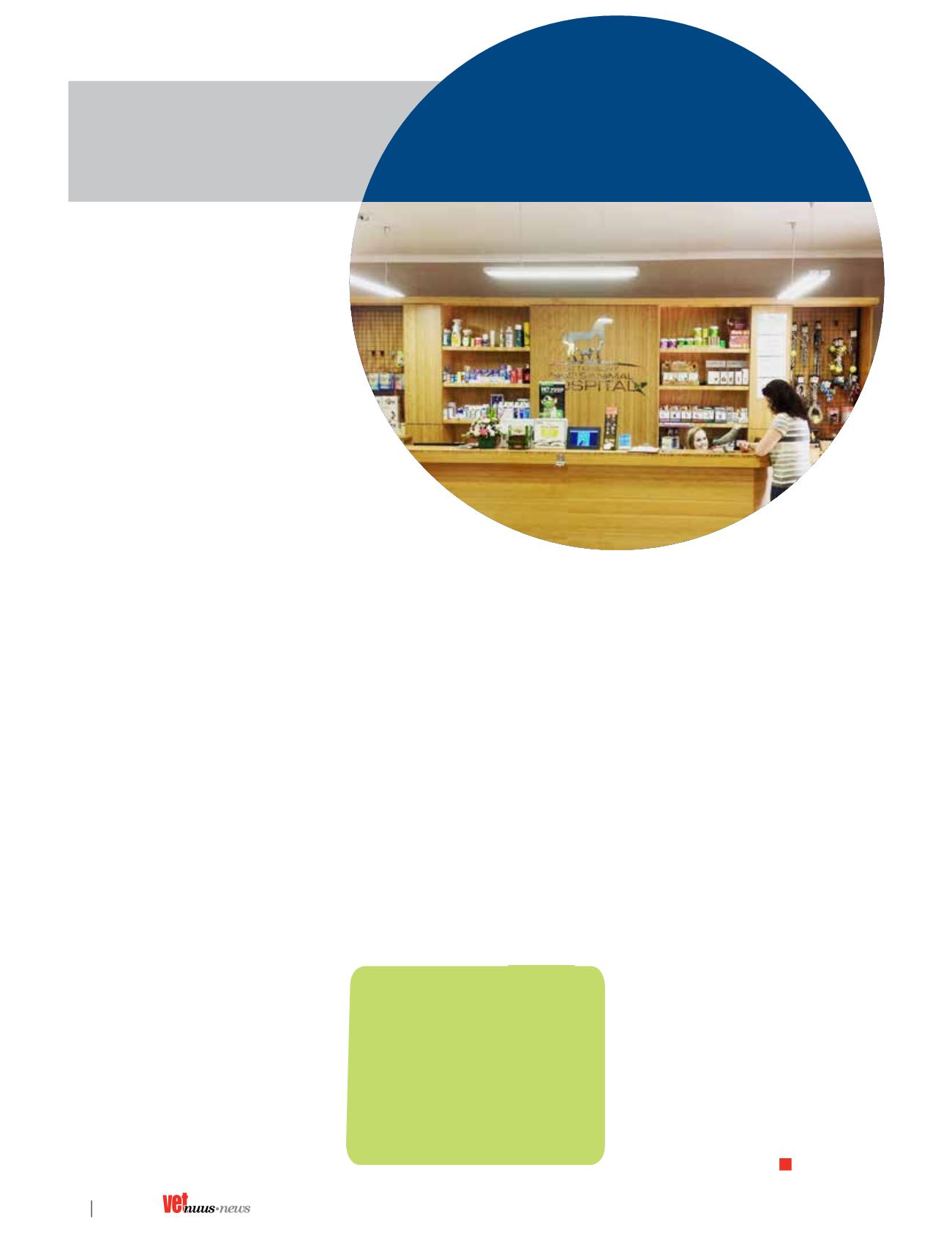
"Reception designed for Atterbury
Bird and Animal Hospital by
6D Creative - Connecting
Animals and Design"
Article
I Artikel