



 12 / 52

10
Feb 2016
Article
I Artikel
S
ix vulture species are now
on the edge of extinction,
according to the latest
assessment of birds
carried out by BirdLife
International for the IUCN Red List of
Threatened Species. In the last update
of the List, six vulture species have
seen their status worsen:
•
Hooded vulture
(
Necrosyrtes
monachus
): Endangered to
critically endangered
•
White-backed vulture
(
Gyps
africanus
): Endangered to
critically endangered
• White-headed vulture
(
Trigonoceps occipitalis
):
Vulnerable to critically endangered
•
Rüppell's vulture
(
Gyps
rueppellii
): Endangered to
critically endangered
•
Cape vulture
(
Gyps coprotheres
):
Vulnerable to endangered
•
Lappet-faced vulture
(
Torgos
tracheliotos
): Vulnerable to
endangered
Five other species of vulture are
found in Africa, and one of these,
the Egyptian vulture (
Neophron
precnopterus
) is already classified
as endangered, with two others, the
bearded vulture (
Gypaetus barbatus
)
and cinereous vulture (
Aegypius
monachus
) as near-threatened.
Just two species that occur in Africa,
the Griffon vulture (
Gyps fulvus
), a
predominantly Southern European
and Central Asian species, and the
mainly vegetarian palm-nut vulture
(
Gypohierax angolensis
), are still
regarded as least concern, though
numbers of Griffon vulture in Africa are
also thought to be declining.
In Africa, the main causes of a drop
in vulture populations appear to be
poisoning and traditional medicine.
• Scientists studied the major
threats to African vultures based
on data from published and
unpublished articles, as well as
Africa’s Vultures
are
Collapsing to Extinction
(Compiled from material published in National
Geographic and by BirdLife International)
Eight of Africa's vulture species have declined in
number by an average of 62 percent during the
last 30 years, according to the first estimates of
a continent-wide decline in the large birds. While
vultures are not cute and cuddly, they are one
of nature's most important scavengers – a flock
can strip a carcass in a matter of minutes, said
study leader Darcy Ogada, assistant director of
Africa Programs for the Peregrine Fund, an Idaho-
based non-profit dedicated to saving birds of prey.
Ogada predicts that these natural recyclers, which
breed slowly and need years to mature, could be
extinct in Africa in the next 50 to 100 years.
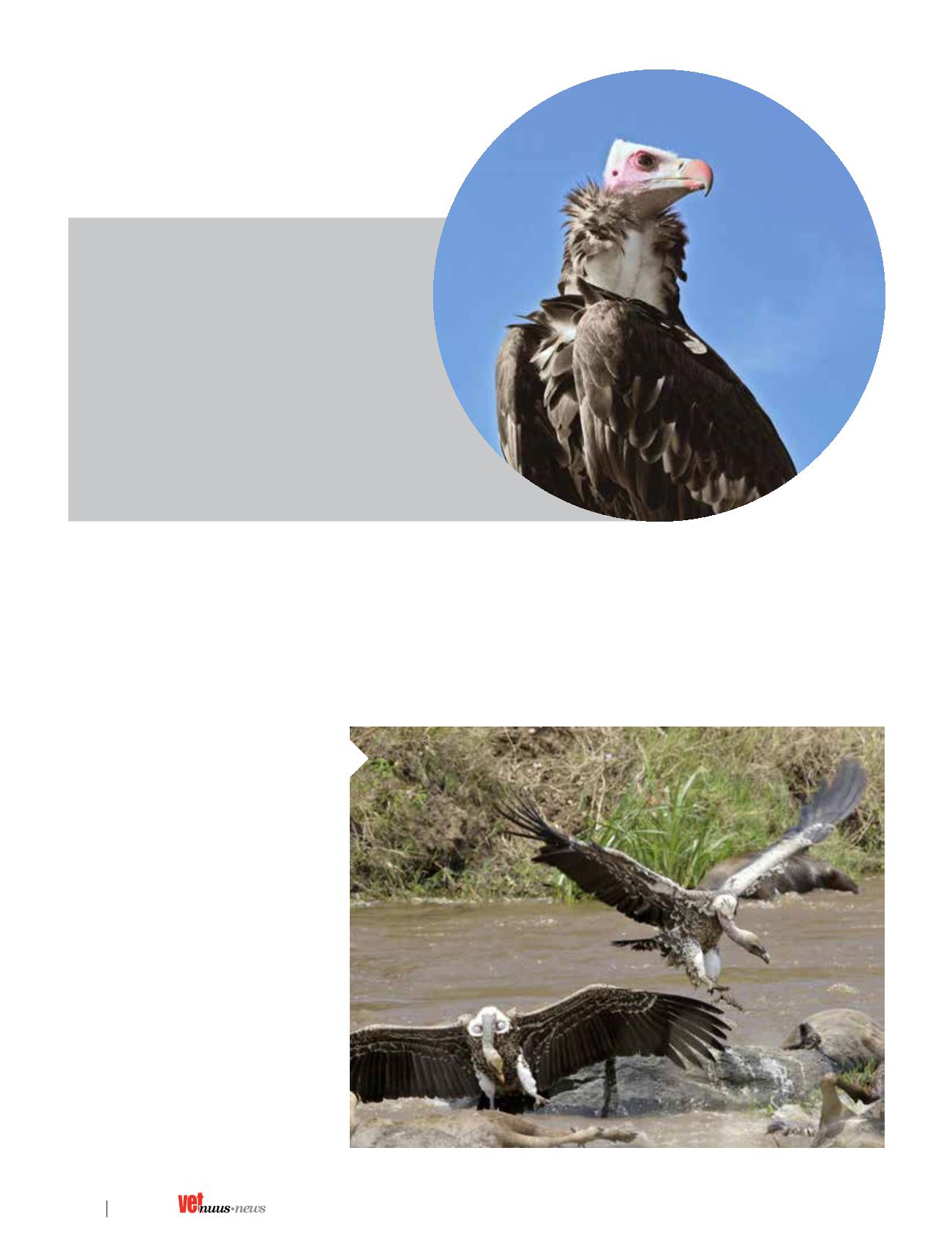
White-headed
Vulture
(photograph by
Michael Gäbler,
via Wikimedia
Commons)
Rüppell’s vulture (photograph by Lip Kee Yap, via Wikimedia Commons)