



 25 / 52

Feb 2016
23
Briewe
I Letters
Dear Paul
I read the article, 'Thirst-
lands: Water Quality and
Availability in the Chobe
Region' on page 9 of the
December, 2015 issue of
VetNews with interest.
It has been estimated
that the African elephant
can eat up to 300 kg of
fodder and drink up to
100 litres of water a day.
Elephants are known to
rip up water supply pipes
to quench their thirst. In
the dry season they can
cause considerable damage. Alternative sources
of water can be laid on close to areas of human
habitation.
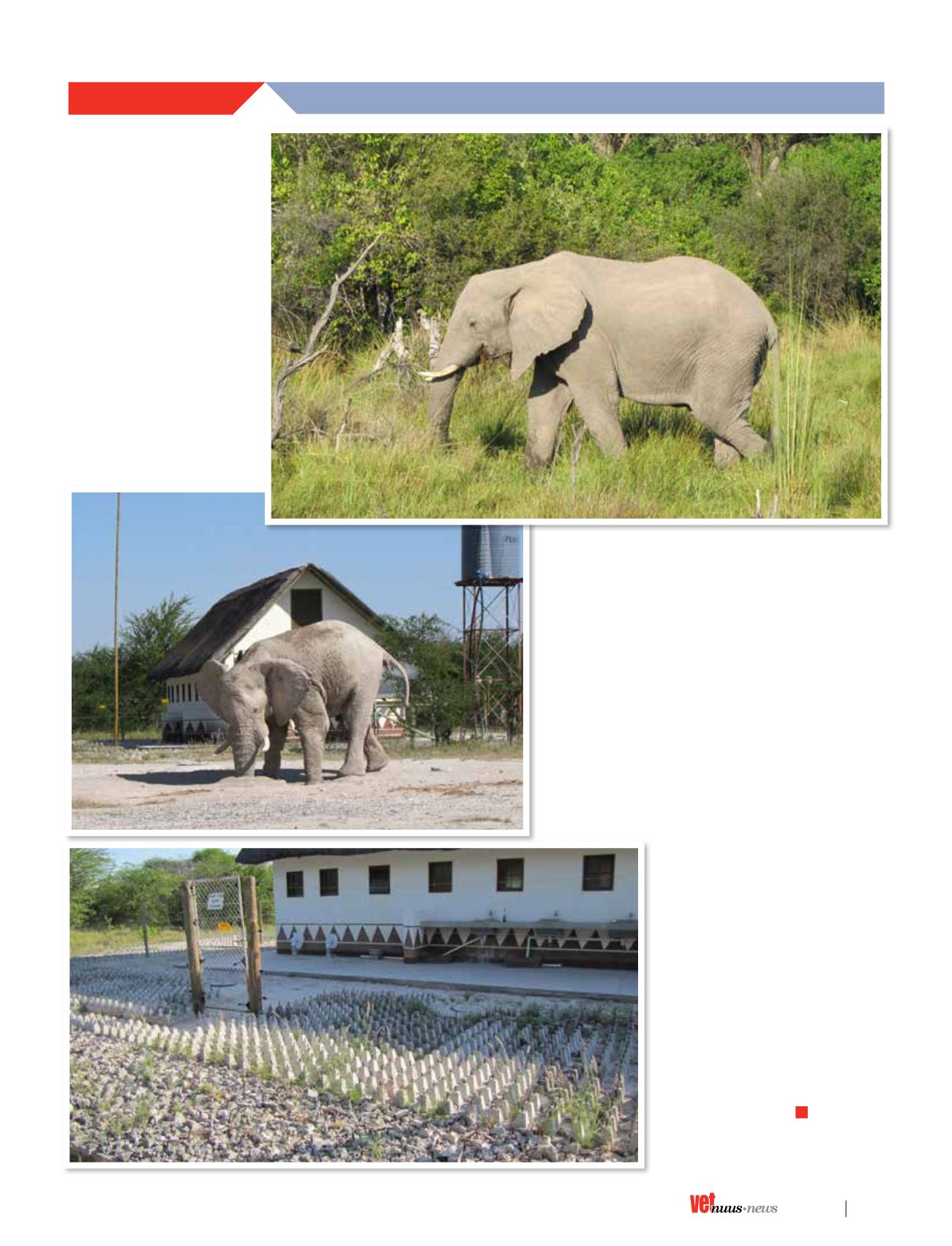
Botswana authorities created ingenious methods
to prevent damage to water supplies. On a trip
to South Camp, in the Nxai Pan National Park, we
were privileged to watch an elephant drinking
from a purpose-built well, encased in concrete.
The ablution block in the background was
surrounded by a concrete apron embedded with
iron spikes long enough to discourage elephants
but short enough as to not produce much more
than sufficient discomfort to the pachyderms'
footpads.
Ingenious inventions include
encasing water piping and
faucets in concrete
–
as we
found in the campsite at
Savute, Chobe National Park.
One inserts one's hand into a
pipe, up to the elbow, to access
and open the tap
–
a somewhat
disconcerting manoeuvre since
one never knows whether one
of Nature's creatures may be in
residence there.
Yours sincerely,
Dr Martin Briggs BSc, BVSc,
MSc(Med), FRCVS
v
•••
LETTER FROM ...
Elephant drinking from well at South camp
Left: Spikes to prevent elephants
damaging water supplies
Martin Briggs