


 31 / 52

Feb 2016
29
Regulars
I
Eye column
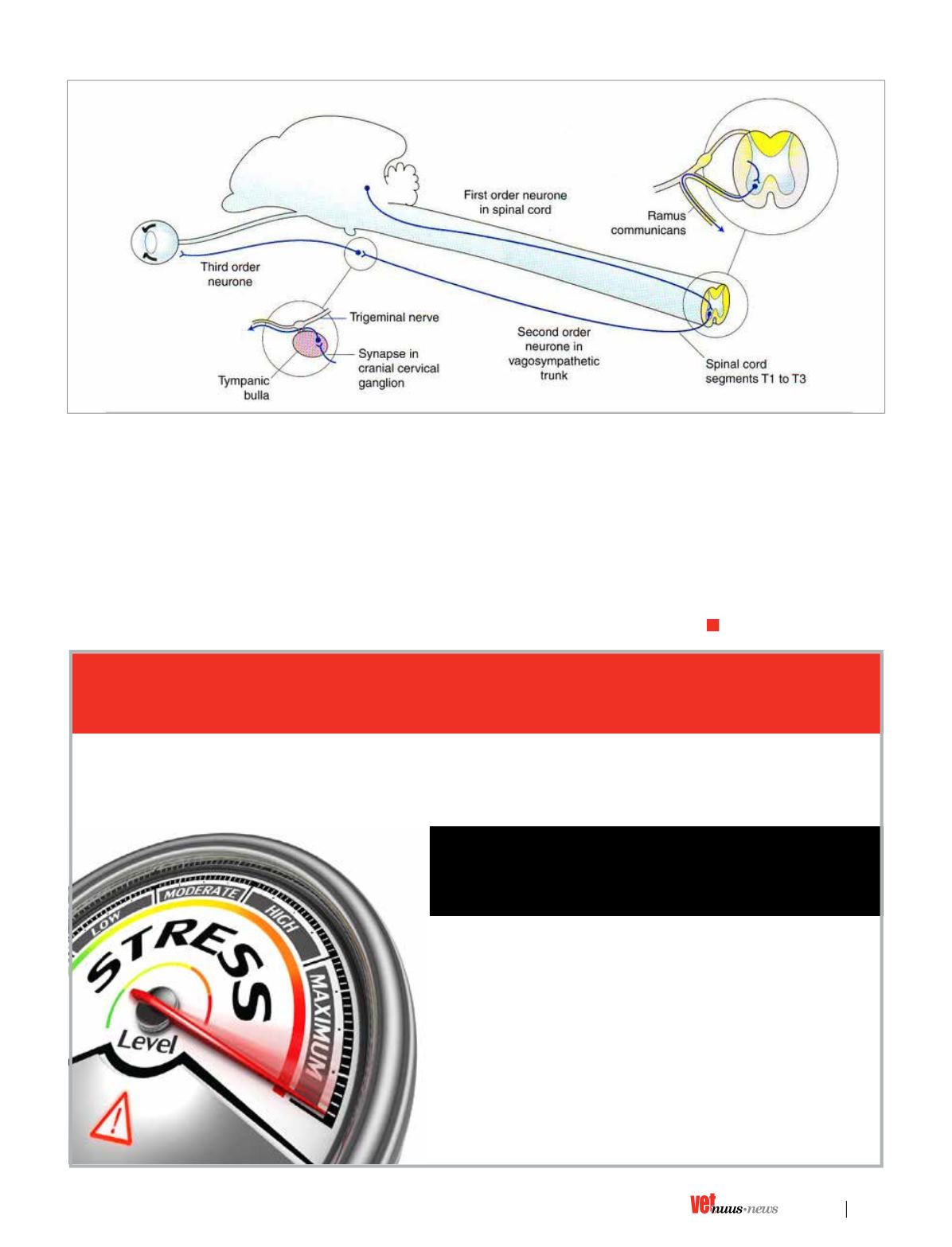
Figure 1: Sympathetic supply to the eye
Anisocoria
Anisocoria refers to pupils of
different size and this can be static
or dynamic. Dynamic anisocoria
is a normal finding. This form
of anisocoria alternates from
eye to eye depending on which
eye is stimulated with light. The
direct pupillary response is more
pronounced than the consensual,
because more than 50% of the fibres
cross over at the optic chiasm and
the posterior commisure.
Static anisocoria is present if both
pupils are equally stimulated in
normal or dim conditions and one
pupil is consistently more miotic or
mydriatic than the other. One should
always exclude any ocular disease
before looking for a neurological
dysfunction. Corneal ulcerations and
uveitis may lead to miosis. Retinal
disease, optic neuritis and glaucoma
will cause mydriasis.
Next month Horner’s syndrome
(sympathetic efferent lesions) will be
discussed.
v
The
SAVA Stress Management Hotline
is there to assist members who are
experiencing personal problems by offering access to professional counselling/advice.
The hotline can assist with referrals or simply offer much needed
emotional support when anxiety, depression, anger, grief, loneliness and
fear are at their highest.
Prof Ken Pettey
082 882 7356
ken.pettey@up.ac.zaDr Sunelle Strydom
083 287 2196
drsunelle@vodamail.co.zaDr Aileen Pypers
072 599 8737
aileen.vet@gmail.comDr Willem Schultheiss 082 323 7019
willem.schultheiss@ceva.comDr Henk Basson
082 820 4810
hjbasson1@gmail.comDr Joseph van Heerden 083 305 6474
doretha@global.co.zaDr Stuart Varrie
083 650 3651
stuartvarrie@gmail.comThe following SAVA members are available on the
SAVA stress management hotline. If required, they
will refer you to professionals.