


 22 / 52

20
Feb 2016
Briefly
I Kortliks
>>> 21
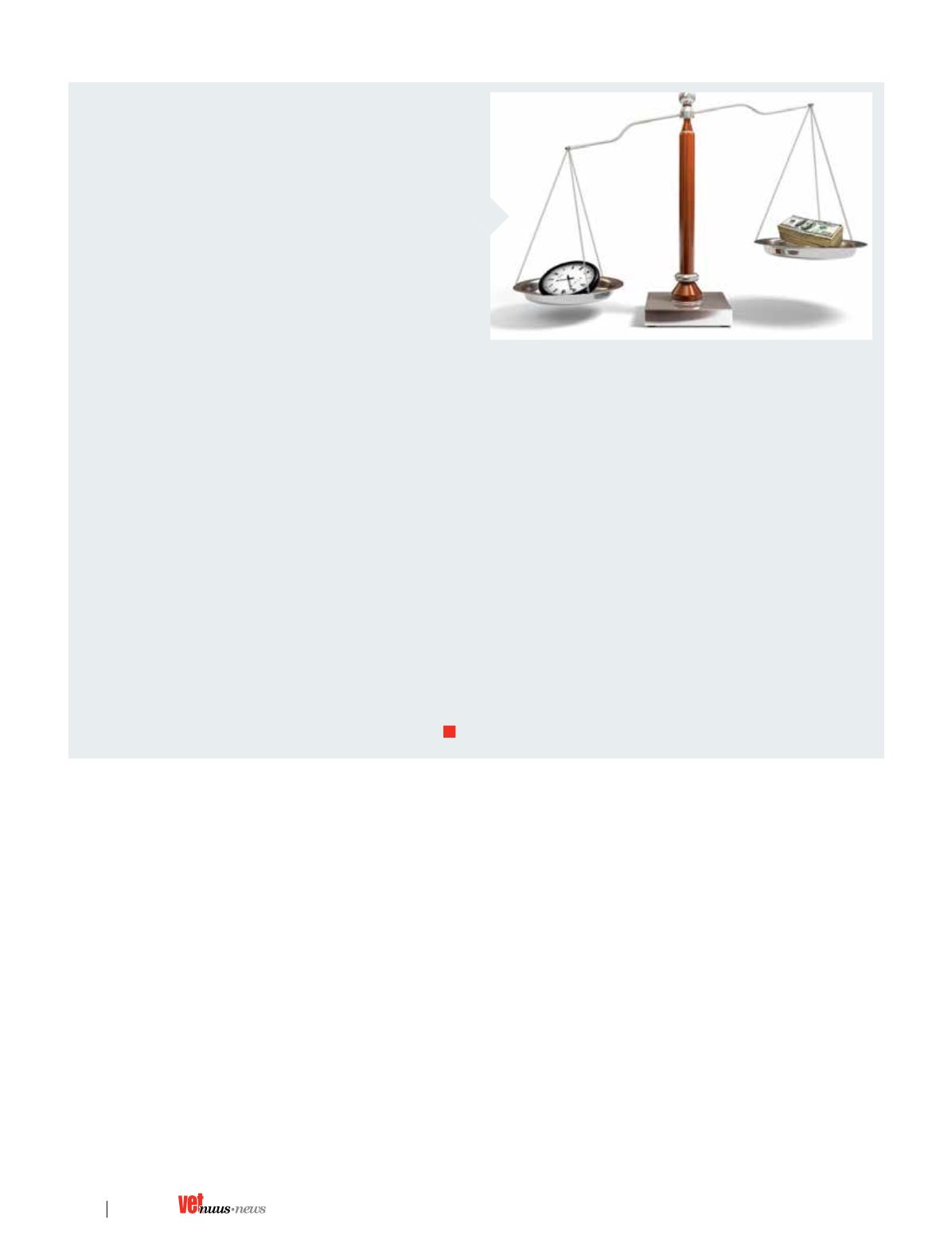
Valuing your time more
than the pursuit of money
is linked to greater
happiness, according to
new research
I
n six studies with more than 4,600 participants, researchers
found an almost even split between people who tended
to value their time or money, and that choice was a fairly
consistent trait both for daily interactions and major life
events.
According to the researchers (from the University of British Columbia), it appears that people have a stable preference for
valuing their time over making more money, and prioritising time is associated with greater happiness.
The researchers found an almost even split with slightly more than half of the participants stating they prioritized their time
more than money. Older people also were more likely to say they valued their time compared to younger people.
The researchers conducted separate surveys with a nationally representative sample of Americans, students at the
University of British Columbia, and adult visitors of a science museum in Vancouver. Some of the studies used real-world
examples, such as asking a participant whether he would prefer a more expensive apartment with a short commute or a
less expensive apartment with a long commute. A participant also could choose between a graduate program that would
lead to a job with long hours and a higher starting salary and a program that would result in a job with a lower salary but
fewer hours.
A participant's gender or income didn't affect whether they were more likely to value time or money, although the study
didn't include participants living at the poverty level who may have to prioritise money to survive.
If people want to focus more on their time and less on money in their lives, they could take some actions to help shift
their perspective, such as working slightly fewer hours, volunteering to work at a charity or paying someone to do disliked
chores like cleaning the house. While some options might be available only for people with disposable income, even small
changes could make a big difference.
(Source: Whillans, A., Weidman, A., and Dunn, E. Valuing Time Over Money Is Associated with Greater Happiness.
Social Psychological and Personality Science, January 2016 DOI: 10.1177/1948550615623842, through www.
sciencedaily.com/releases/2016/01/160107094105.htm)v
World Small Animal Veterinary Association Launches
Updated Vaccination Guidelines
T
he Vaccination Guidelines Group (VGG) of the World Small Animal Veterinary Association (WSAVA) has updated
the vaccination guidelines it offers to veterinarians. The WSAVA's “Canine and Feline Vaccination Guidelines”
aim to provide globally applicable recommendations on best practice for the vaccination of dogs and cats to help
veterinarians to undertake the practice in a standard and scientifically justified fashion. The VGG has also updated the
vaccination guidelines it offers to pet owners and breeders, as well as the series of fact sheets it has created on key global
vaccine-preventable diseases of dogs and cats.
The original vaccination guidelines were published in 2007 as the WSAVA's initial response to the need for globally
applicable recommendations on vaccination best practice. They were updated in 2010 and, since then, the VGG, which is
supported exclusively by MSD Animal Health, has been focusing on issues relating to small companion animal infectious
disease and veterinary education in Asia.
The 2015 release of the “Canine and Feline Vaccination Guidelines” is based on a new evidence-based classification
system for vaccinology. It also includes a number of additional FAQs (110 in total). The guidelines for both veterinarians
and owners/breeders are available for free download at
http://www.wsava.org/educational/vaccination-guidelines-group.Currently available in English, they are being translated into a number of languages.
Professor Michael Day, Chair of the VGG, says: "The Vaccination Guidelines are one of the most frequently downloaded